The End of the Polished Panel: How Intimate Formats Are Transforming Congress Programming
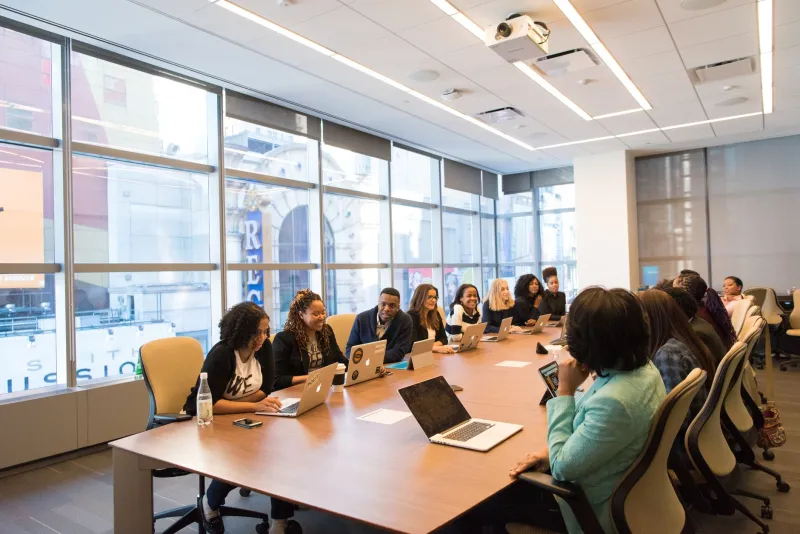
There is a particular kind of professional disappointment that anyone who has attended enough industry congresses will recognize. You have cleared your calendar, traveled across the country, and settled into a conference room expecting a candid exchange between sector leaders—only to watch four panelists deliver pre-rehearsed talking points while a moderator checks off questions from a prepared list. By the third answer, the laptops are open.
This experience is not universal, but it is common enough to have shaped a growing consensus among senior executives: the traditional panel format, as typically executed, is not delivering what it promises. The format suggests dialogue but often produces parallel monologue. It implies candor but is structured in ways that reward caution. And for executives who have sat through dozens of these sessions across their careers, it has become almost entirely predictable.
The congresses that are holding and growing senior executive audiences are responding to this reality by redesigning their programming from the ground up.
Why Traditional Formats Struggle to Deliver
The architecture of a conventional congress session—elevated stage, directional seating, microphone-dependent participation—creates dynamics that work against genuine exchange. Speakers are physically separated from the audience. Audience members are positioned as passive recipients rather than active contributors. The format signals that expertise flows in one direction only.
Speakers, for their part, are rarely incentivized to take risks. A polished, inoffensive presentation protects reputation. A candid admission of uncertainty or failure, however valuable to the audience, carries professional exposure. In an environment where sessions are recorded, transcribed, and distributed across professional networks, even experienced leaders default to safety.
The result is a structural mismatch between what executives say they want from congresses—access to authentic peer perspective, exposure to unfiltered market intelligence, honest discussion of shared challenges—and what conventional programming actually delivers.
The Rise of the Fireside Chat
Among the formats gaining traction at forward-thinking congresses, the fireside chat has perhaps the most established track record. At its best, the format pairs a skilled interviewer with a single speaker in a conversational setting, creating conditions for genuine revelation that a panel rarely achieves.
The key variable is the quality of the interviewer and the depth of their preparation. A well-executed fireside chat surfaces the thinking behind decisions, not just the decisions themselves. It creates space for the speaker to acknowledge complexity, express uncertainty, and share the kinds of hard-won lessons that never appear in press releases.
For attendees, the value is in the texture of the conversation. A CEO who admits that a widely praised strategic pivot nearly failed, and explains what saved it, delivers insight that no keynote deck can replicate. That kind of candor is memorable, quotable, and genuinely useful to peers navigating similar terrain.
Roundtables: Structured Peer Exchange at Scale
While fireside chats address the keynote problem, they do not solve the participation challenge. Attendees at industry congresses are not simply seeking better content delivery—they are seeking opportunities to contribute their own perspectives and engage with the thinking of genuine peers.
Roundtable formats address this directly. By limiting group size—typically between eight and twenty participants—and organizing discussion around a specific, pre-circulated challenge or question, roundtables create conditions where participation is expected rather than exceptional.
The most effective congress roundtables share several design features. They are organized around problems rather than topics—not "digital transformation in the supply chain" but "what has failed in your digital transformation efforts, and what did you learn from it?" They are facilitated rather than moderated, with a leader whose role is to draw out quieter voices and prevent any single participant from dominating. And they operate under explicit confidentiality norms that encourage candor without exposure.
For attendees, the roundtable experience often produces the highest-quality relationships of the entire congress. The shared vulnerability of honest problem-discussion creates a form of professional intimacy that cocktail-hour networking rarely achieves.
Open Forums and Unconference Structures
A more radical departure from conventional programming is the open forum or unconference model, in which the agenda itself is co-created by attendees at the start of the session. Participants propose discussion topics, vote with their presence by joining the conversations that interest them most, and self-organize into groups that reconvene to share findings.
This format is not appropriate for every congress context. It requires a participant group that is sufficiently engaged, experienced, and willing to contribute actively. It also requires organizers confident enough in their audience to relinquish agenda control. But in the right environment, the unconference model produces programming that is precisely calibrated to the actual concerns of the people in the room—a standard that no pre-planned agenda can consistently match.
Several technology and healthcare sector congresses in the United States have incorporated unconference elements into their programming with notable success, reporting higher attendee satisfaction scores and stronger return attendance among senior participants.
Speed Networking with Substance
Not all format innovation is occurring in formal session structures. The networking component of congress programming—historically an unstructured social exercise that rewards extroversion and penalizes those without large existing networks—is also being redesigned.
Structured speed-networking models, adapted from formats used in venture capital and academic contexts, are appearing at a growing number of industry congresses. These formats assign participants to brief, timed one-on-one or small-group conversations organized around specific shared interests or challenges, then rotate participants through multiple exchanges within a defined timeframe.
The effect is to democratize networking by removing the social dynamics that advantage some participants over others. A first-time congress attendee with relevant expertise but no existing industry relationships can generate as many substantive connections in a structured speed-networking session as a veteran with a full contact list.
Designing for Authentic Connection
Across all of these emerging formats, a common principle is at work: the most valuable congress experiences are those that create structural conditions for authentic exchange rather than simply providing a stage for performance.
This principle has implications for every dimension of congress design—room configuration, session length, facilitator selection, confidentiality norms, and the balance between structured programming and open time. Congresses that take this principle seriously are finding that executives respond to it. Attendance is more consistent, engagement is deeper, and the congress itself becomes the kind of experience that participants describe to colleagues—which is ultimately the most powerful marketing any event can generate.
The polished panel is not disappearing entirely. There will always be a place for well-crafted presentations from leaders with genuinely important things to say. But the congresses that will define the next chapter of professional gathering are those that treat authentic dialogue not as a byproduct of programming, but as its primary purpose.